Wild Jawai

The Sacred Hills: Coexisting with the Leopards of Bera

Excerpt: An intimate look at how the Rabari pastoralists and wild apex predators have shared granite caves without fences for generations.

The Granite Monoliths of Jawai

In most corners of the world, leopards (Panthera pardus) are ghost-like phantoms—solitary hunters prowling dense forest undergrowth under total darkness. In the Jawai-Bera region of southern Rajasthan, however, nature follows a completely different rhythm.

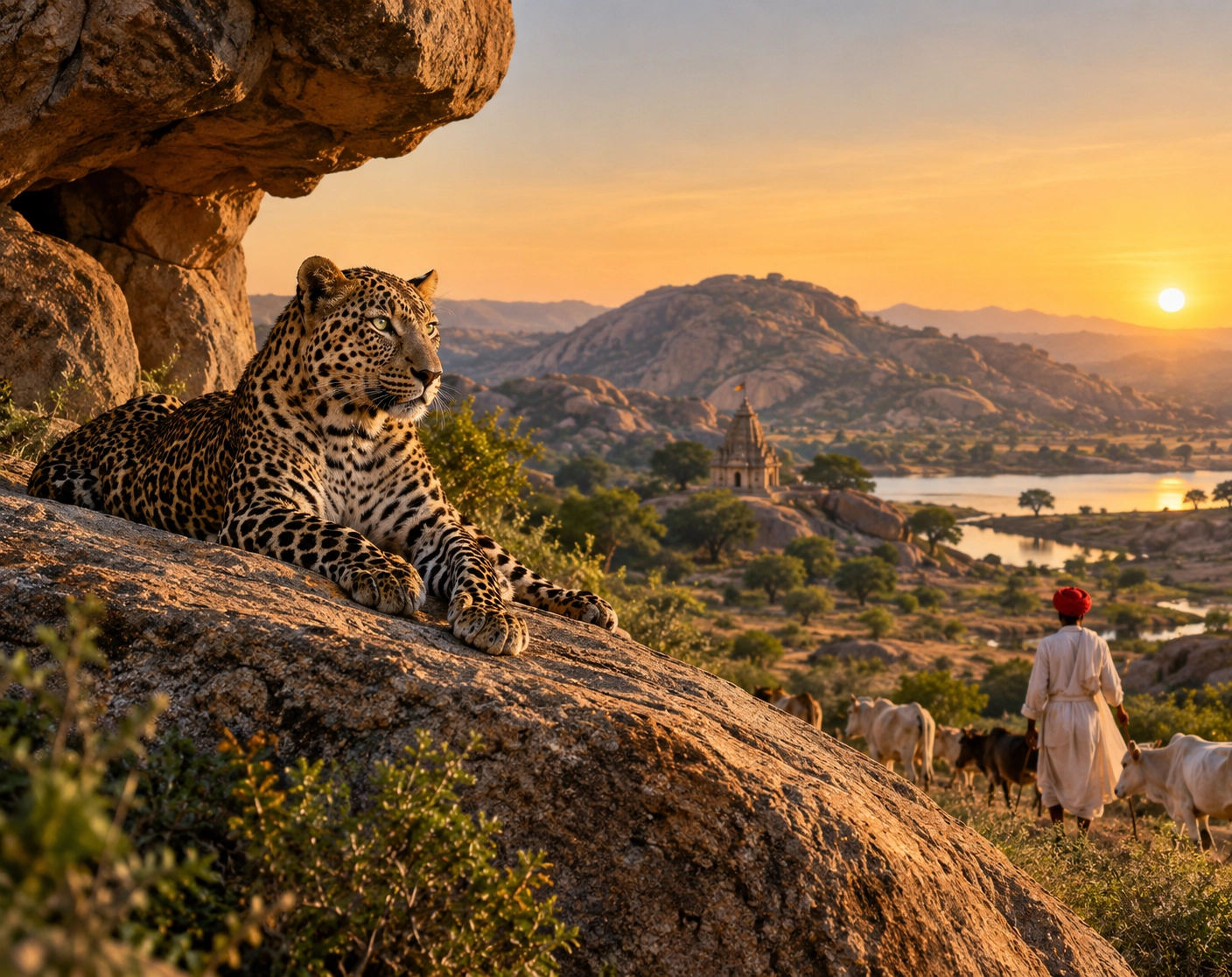
Rising sharply from the scrubland plains are massive, wind-smoothed granite hills known locally as kopjes. Formed over billions of years, these colossal boulder formations are riddled with natural hollows, subterranean fissures, and wide caves. These ancient stone alcoves serve as natural homes for over five dozen wild leopards, offering natural thermal insulation against the desert heat and commanding watchtowers over the surrounding wilderness.

The Daylight Phenomenon

Because these granite hills provide unmatched elevation and safety, the leopards of Bera have developed a rare behavioral confidence found nowhere else on earth:

  • Open-Air Basking: It is customary to see full-grown leopards resting on sun-warmed rocks at midday, calmly observing local herdsmen moving through the valley below.

  • Granite Nurseries: Mothers routinely raise and play with cubs on open rocky ledges in clear view of nearby temples and settlements.

  • Night Terraces: As evening descends, the kopjes transform into vantage points where leopards scan the brush for wild boar, nilgai, and small game.

The Rabari Pact — Harmony Without Fences

The true heart of the Jawai phenomenon lies not merely in the geography, but in the spiritual worldview of the indigenous Rabari pastoralists.

Draped in traditional white garments with distinctive crimson pagris (turbans), the Rabari are nomadic camel and cattle herders who have roamed these valleys for centuries. Their relationship with the apex predator is governed by deep reverence:

"The leopard is the sacred vehicle of Ambe Mata. If a leopard takes an animal from our herd, it is not a loss; it is an offering accepted by the divine"

Because the Rabari do not retaliate, hunt, or lay traps, generations of leopards have never experienced human aggression. This lack of fear has fostered mutual respect: humans and free-roaming leopards share the same walking trails, water holes, and hill paths without the need for national park fences, concrete barriers, or armed rangers.

The Thread to House of Bera

For the House of Bera, the leopard is an eternal emblem of resilience, quiet authority, and grace. We celebrate this wild coexistence by integrating the imagery of the Jawai leopard across our brand identity—from hand-engraved metal crests to the archival silk lining sewn into our signature quilted outerwear.

To wear our garments is to carry the untamed spirit of these sacred hills: a reminder that true power moves quietly, and true luxury honors the natural world.

Leave a Reply

Your email address will not be published. Required fields are marked *